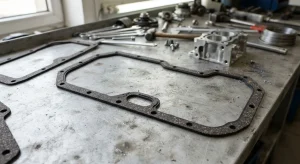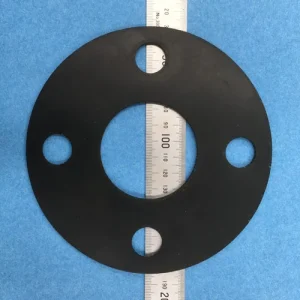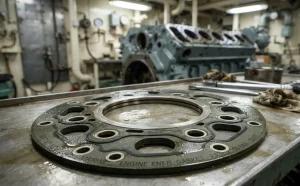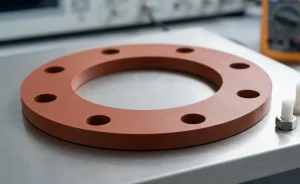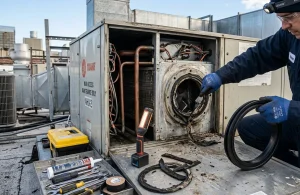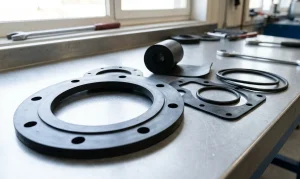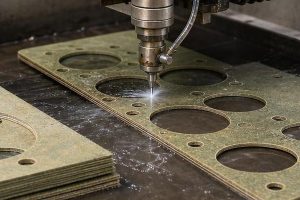
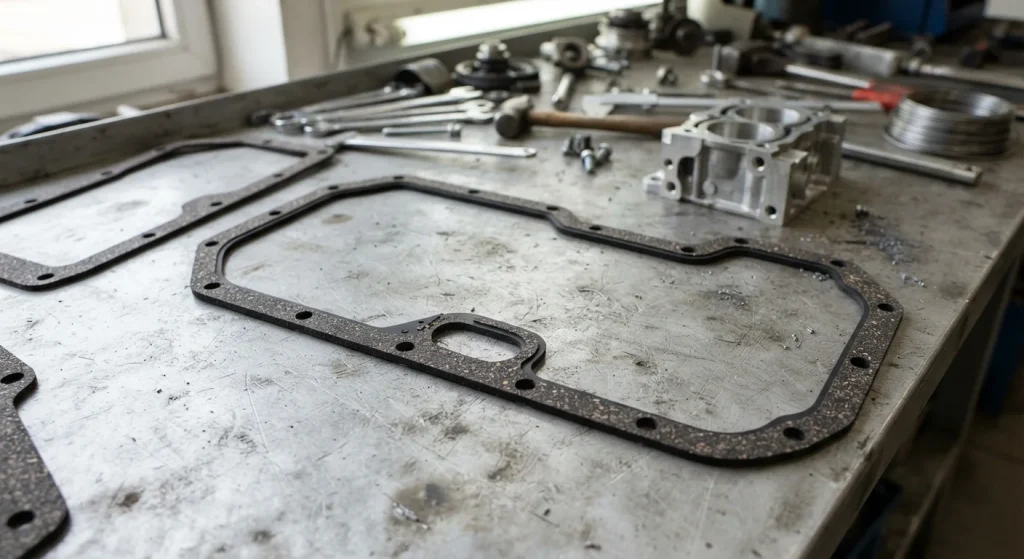
Gasketech manufactures custom cork rubber gaskets in Melbourne from supplied drawings or samples for suitable automotive engine rebuild applications.
Custom cork rubber gaskets can suit selected engine covers and housings when the material grade, thickness and joint design match the service conditions. They are not a universal replacement, so workshops should confirm the fluid, temperature, pressure and original specification before ordering.
Where Custom Cork Rubber Gaskets May Suit Engine Rebuilds
Cork jointing is a dense, compressible gasket material used in automotive applications such as sump and rocker-cover gaskets. Combining cork with a suitable rubber binder can change its sealing behaviour and fluid resistance, but those properties depend on the precise grade.
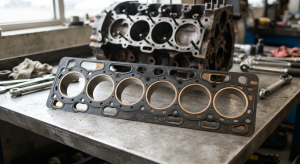
A gasket that fits the bolt pattern can still be unsuitable if the joint exceeds its rated temperature, pressure or fluid compatibility. Cork-based sheet should not be assumed suitable for cylinder-head, exhaust or other high-temperature and high-pressure joints.
Information Needed for Custom Gasket Production
Accurate dimensions are only one part of a useful manufacturing specification. Before we quote, workshops should provide:
- Component and location: Identify the engine part and joint being sealed.
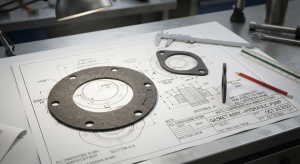
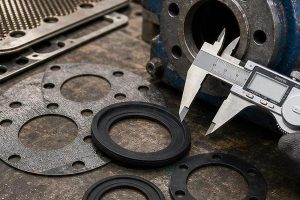
- Drawing or sample: Supply a dimensioned drawing or intact gasket that can be measured.
- Material specification: Include the original material, approved substitute or required grade when known.
- Fluid exposure: State the oil, coolant, fuel or other substance contacting the gasket.
- Operating conditions: Provide known temperatures, pressures and relevant cycling conditions.
- Thickness and quantity: Confirm the finished thickness, order volume and required date.
- Installation details: Note the flange condition, bolt pattern and relevant manufacturer instructions.
An old, stretched or damaged sample may not reproduce the original dimensions accurately. If information is incomplete, we can discuss what is available, but the customer or responsible engine specialist must approve the material and dimensions.
Material Choice Comes Before Cutting
Custom manufacturing solves availability and geometry problems. It does not make an unsuitable sheet correct for the application. Compatibility, temperature capability and compressibility should be checked against current material data and the component manufacturer’s requirements.
Our workshop material packs include industrial-grade cork jointing in several listed thicknesses, alongside other workshop gasket materials. Our custom gasket service supports made-to-measure parts from customer drawings or samples, including orders for automotive replacement-parts suppliers.
Australia’s passenger-vehicle fleet had an average age of approximately 11.3 years in January 2025, according to the BITRE Road Vehicles Australia report. This does not establish gasket suitability, but it helps explain why workshops encounter older engines with discontinued or difficult-to-source parts.
Ordering Repeatable Replacement Gaskets
Once dimensions and the approved material are confirmed, a retained drawing or specification can make later orders more consistent than repeatedly tracing a worn gasket. Custom cork rubber gaskets may therefore be practical for restoration work, workshop stock or repeated rebuilds involving the same component.
Our article on rubber gaskets for heavy-duty engine rebuilds explains additional selection factors for demanding diesel applications. It should not be used to assume that rubber, cork or a combined material suits every engine joint.
Match Your Application with the Right Gasket Material
At Gasketech, we manufacture gaskets for customer-defined requirements and offer cork, natural and synthetic rubber, fibre, graphite, PTFE and other listed materials. Final performance still depends on correct specification, installation and mating-surface condition.
For custom cork rubber gaskets, contact Gasketech for a quote with your drawing or sample, material requirements, quantity and operating details. We can review the request against our available materials and manufacturing capabilities before production.